
Free Will or Divine Script? Who’s Really in Control?

“The creation of evil is not evil but committing evil is,” was a point made in our panel exploring one of humanity’s oldest questions, are our lives shaped by divine will or human freedom?
On Thursday the 30th of October 2025, the Wesley Centre for Theology, Ethics and Public Policy hosted an interfaith panel in Parkville titled “Free Will or Divine Script? Who’s Really in Control?”. This was done in partnership with the Australian Intercultural Society (AIS)
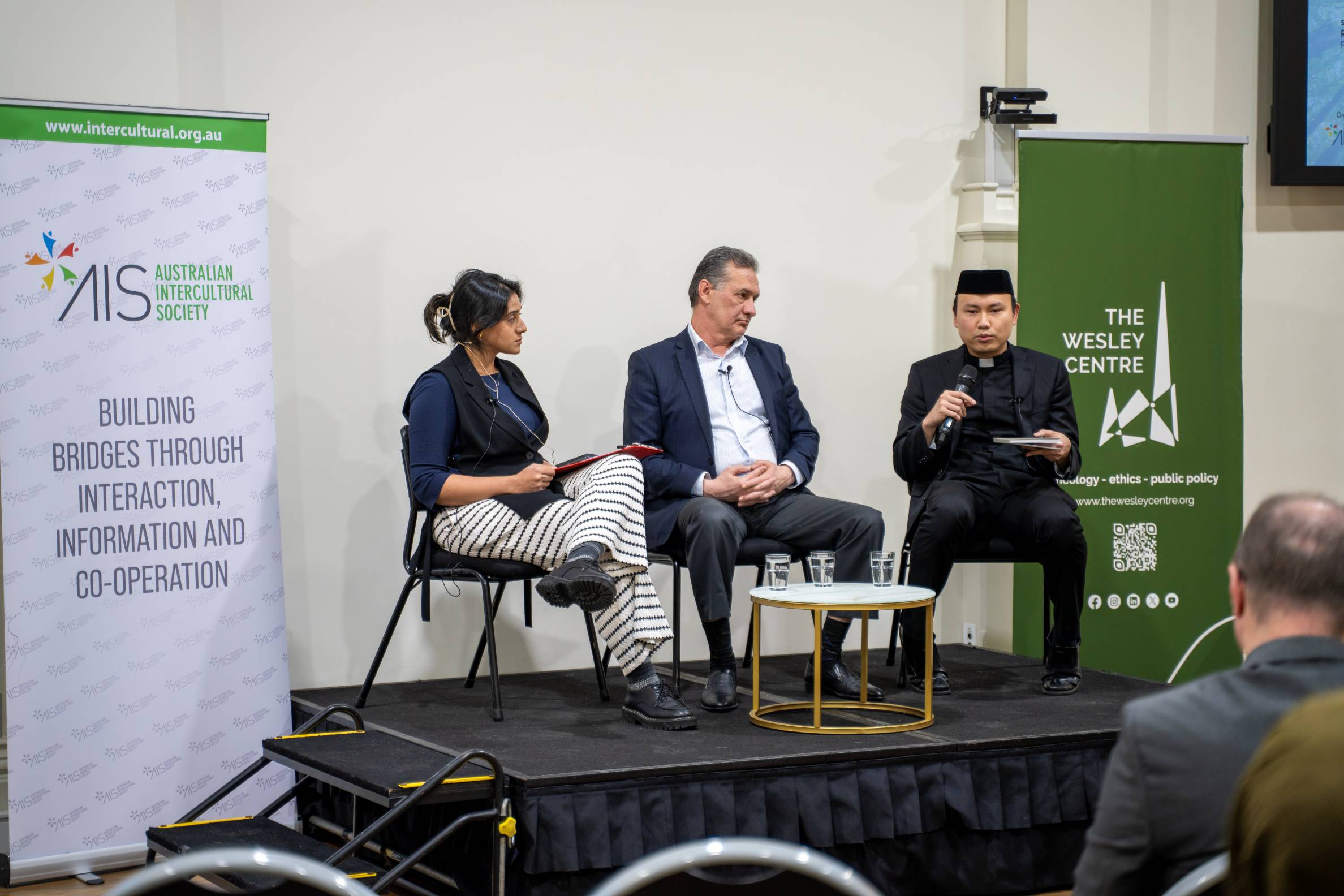
The discussion brought together Christian and Muslim scholars to talk about free will, human agency, suffering and causality. Rev. Dr Robyn Whitaker, Director of the Wesley Centre, opened the evening by welcoming guests and acknowledging the Traditional Custodians of the land. She said “In this polarized and divisive world of ours, there’s nothing more important than being able to talk with one another, even on things we have differences about,” she said. “Here we can model what that looks like.”
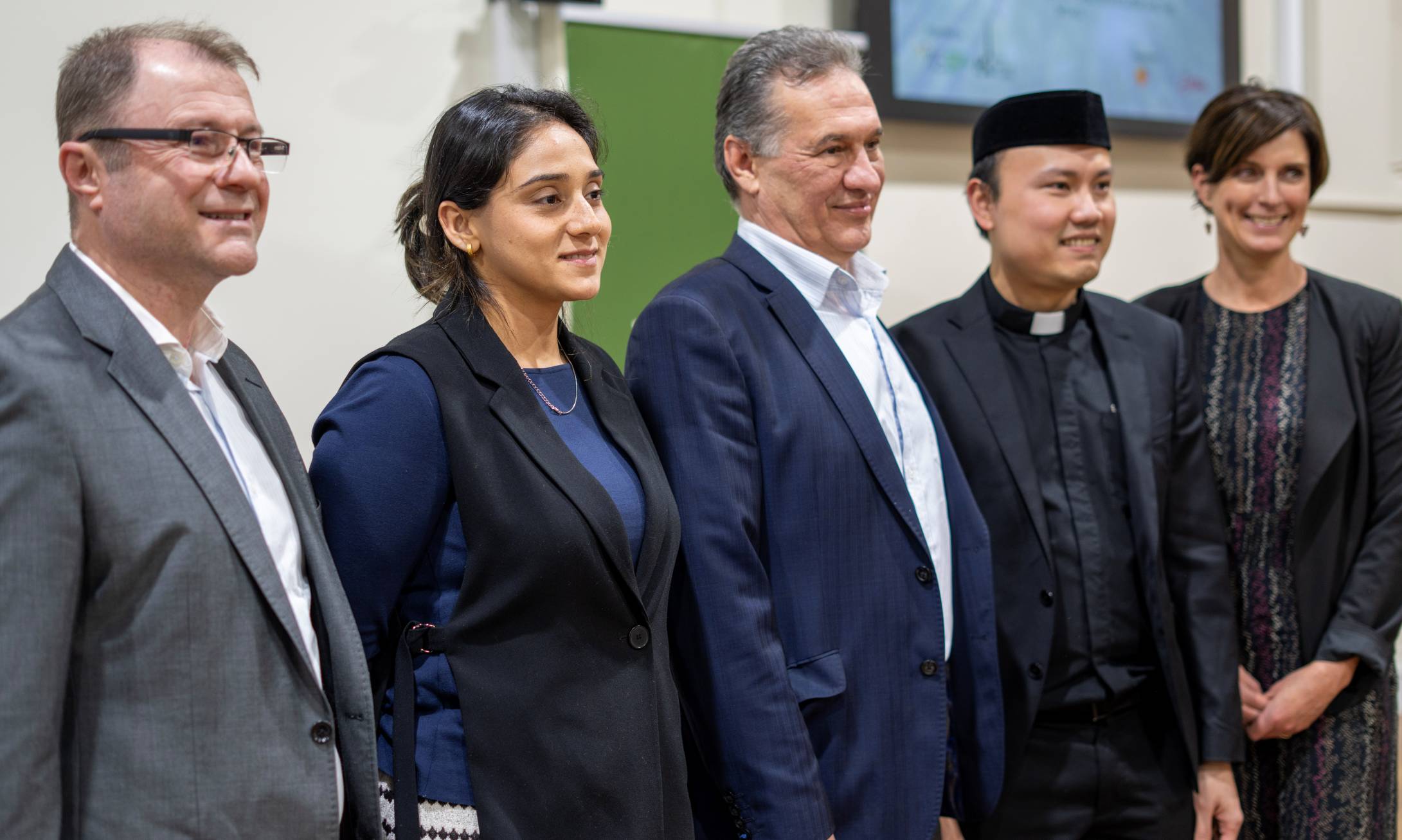
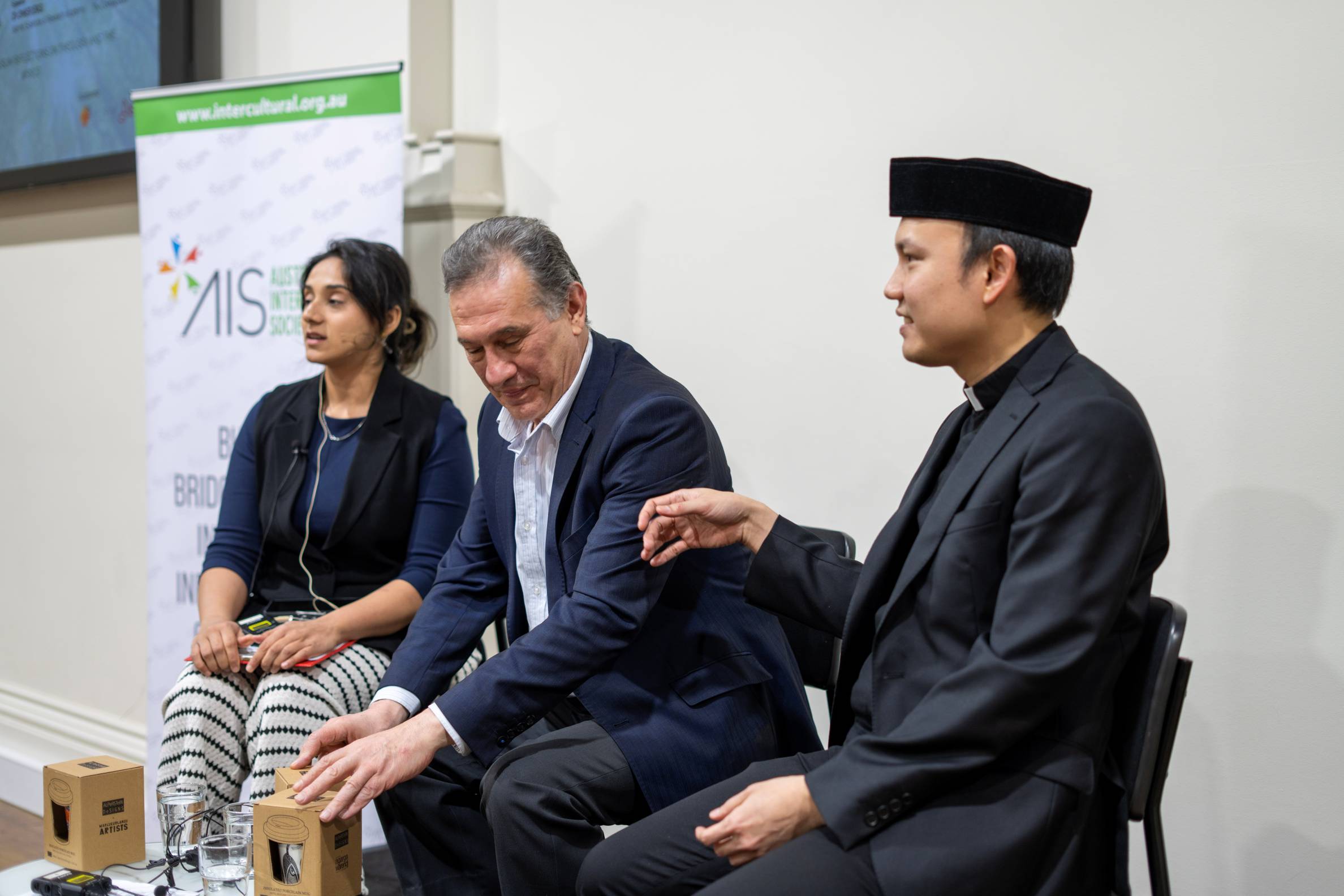
Moderated by Noor Gillani, Digital Culture Editor at The Conversation, the event featured Rev. Dr Daniel Sihombing from Pilgrim Theological College and Dr Omer Ergi from the Islamic Sciences & Research Academy, with Ahmet Keskin, Executive Director of AIS, delivering the closing remarks.
Noor framed the topic as a deeply relevant moral question, observing that if there is no free will, it becomes difficult to hold anyone accountable for their actions.
Dr Ergi explained that Islamic thought has long wrestled with balancing divine destiny (qadar) and human agency. “Destiny is one of the six essential articles of faith in Islam,” he said. “But believing in destiny doesn’t mean we are puppets of fate.” Using an analogy, he added, “If a road sign says ‘Sydney 824 km,’ that knowledge doesn’t change the distance, it simply reflects it. Likewise, God’s knowledge reflects what we freely choose; it doesn’t compel us.”
Rev. Dr Sihombing shared a Christian perspective rooted in Reformed theology, highlighting the coexistence of divine sovereignty and human freedom. “God governs creation through Word and Spirit not coercively, but gently,” he said. “There is space for human agency even within divine sovereignty.”
The panel also explored the existence of evil and suffering. Dr Ergi explained that while God creates all things, it is human misuse that leads to harm. “The creation of evil is not evil but committing evil is,” he said. “Fire can warm or burn; how we use it determines whether it becomes harmful.” Rev. Dr Sihombing noted that Christian scripture focuses less on the origin of evil and more on how believers should respond to it. “Jesus doesn’t explain the source of evil. He resists it through compassion, healing, and justice,” he said.
In closing, Ahmet Keskin thanked the speakers and audience for embodying the spirit of respectful dialogue. “Tonight reminds us that whilst our understanding of theology differs, it can also trigger our curiosity to know more about each other’s beliefs and practices, thereby enriching our experience in the world we live in” he said. “Both Islam and Christianity call us to use our freedom for good where divine will and human will meet.”
To watch more of the panel CLICK HERE