Official relaunch of the Fethullah Gülen Chair at ACU
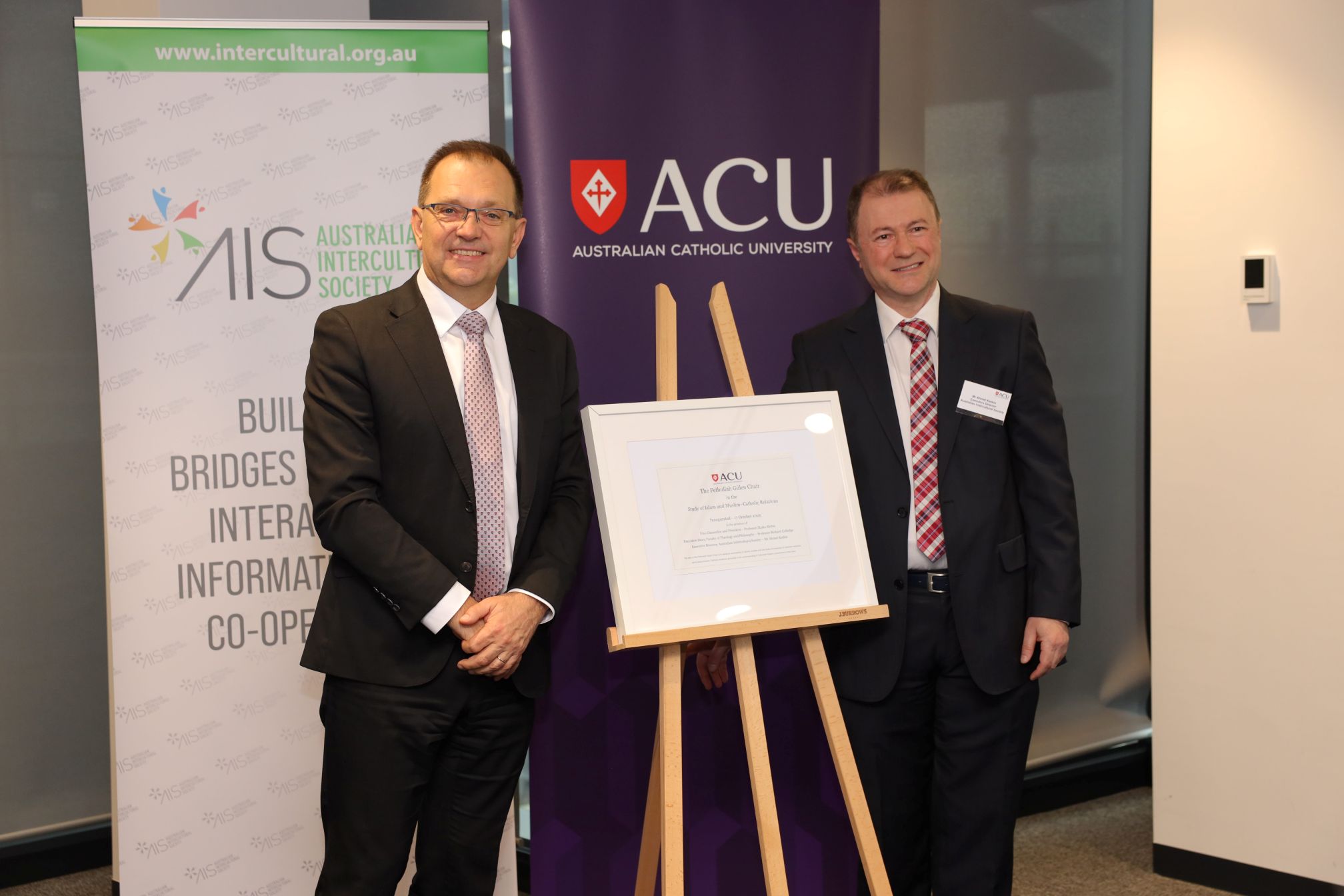
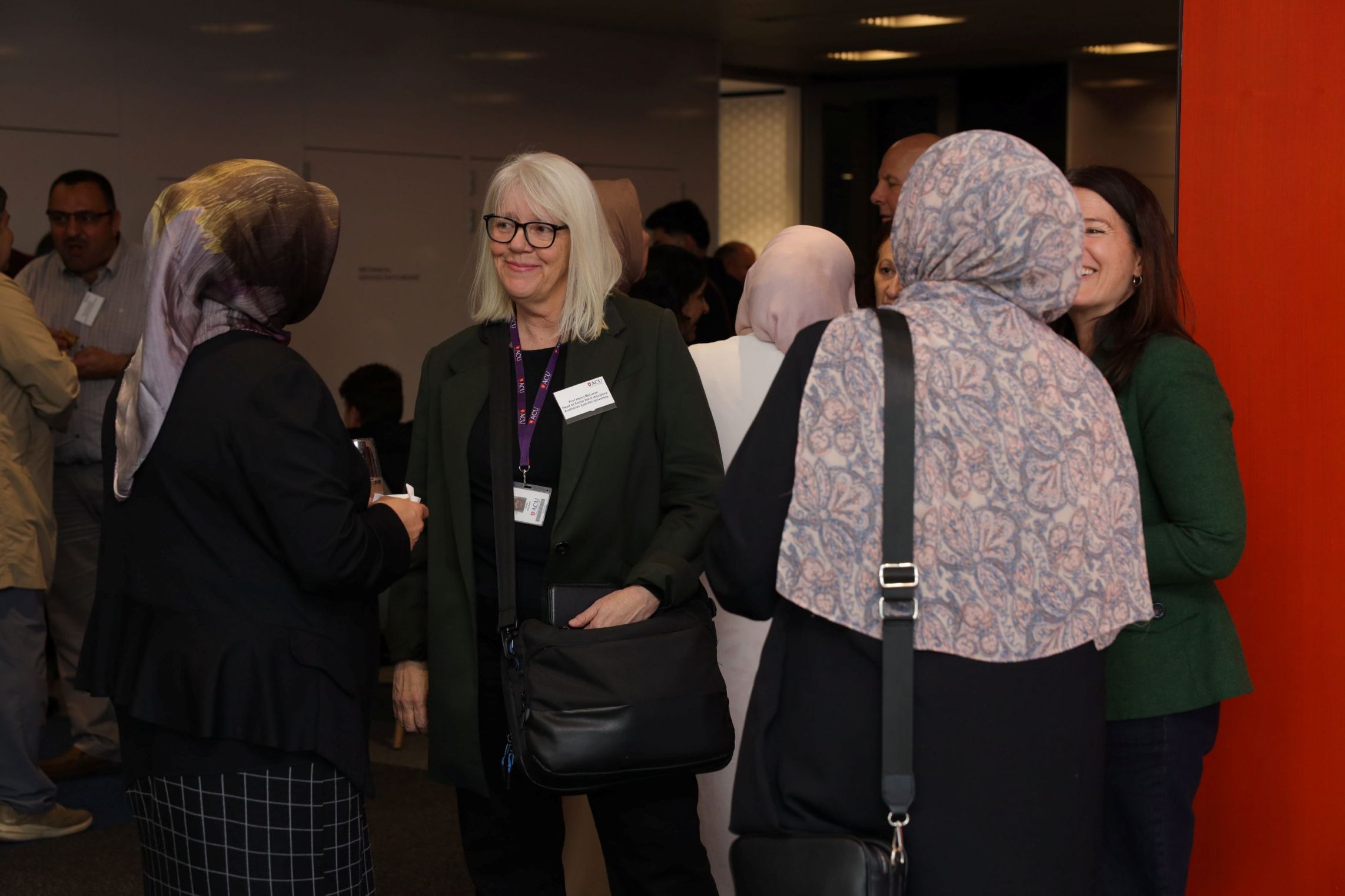
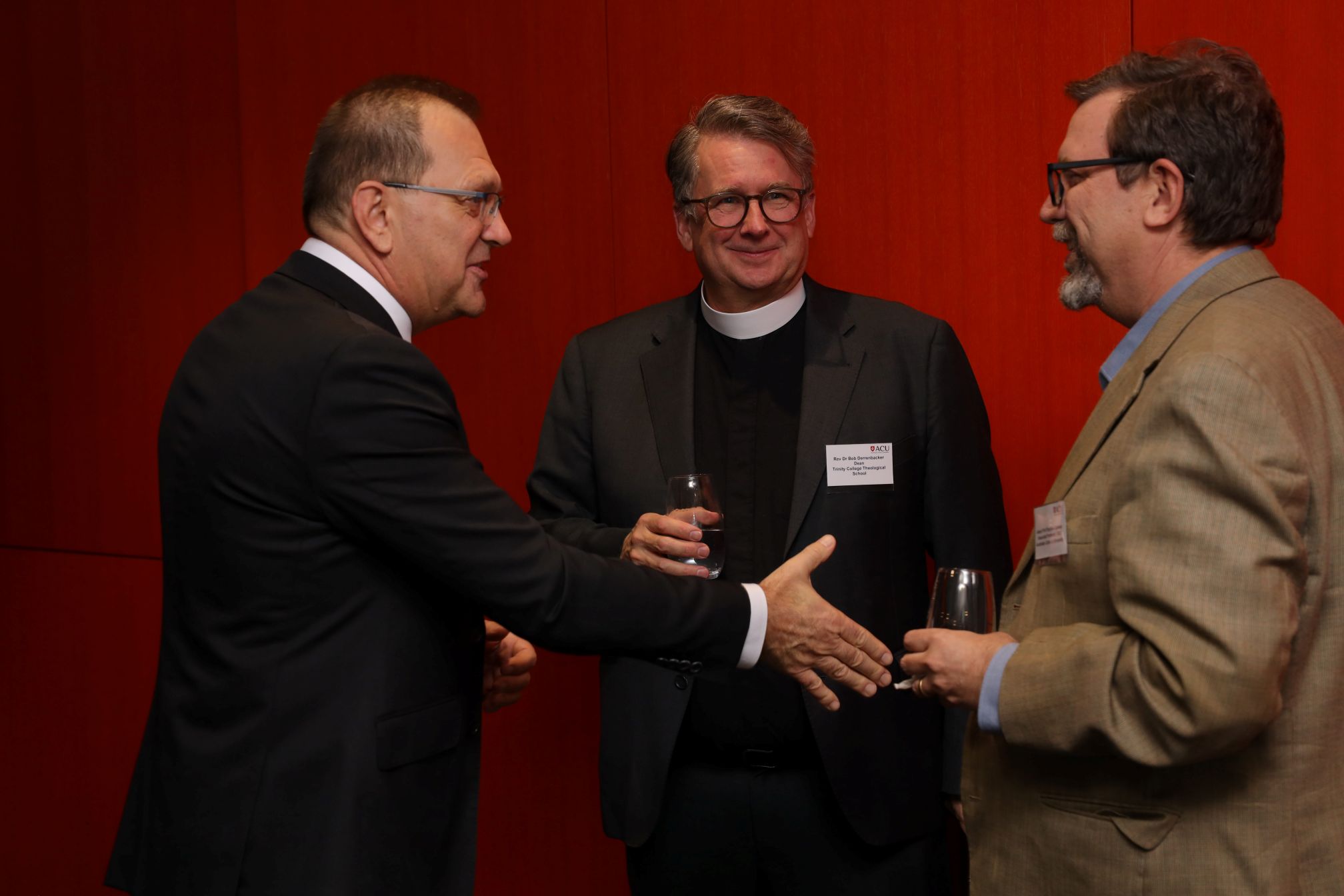
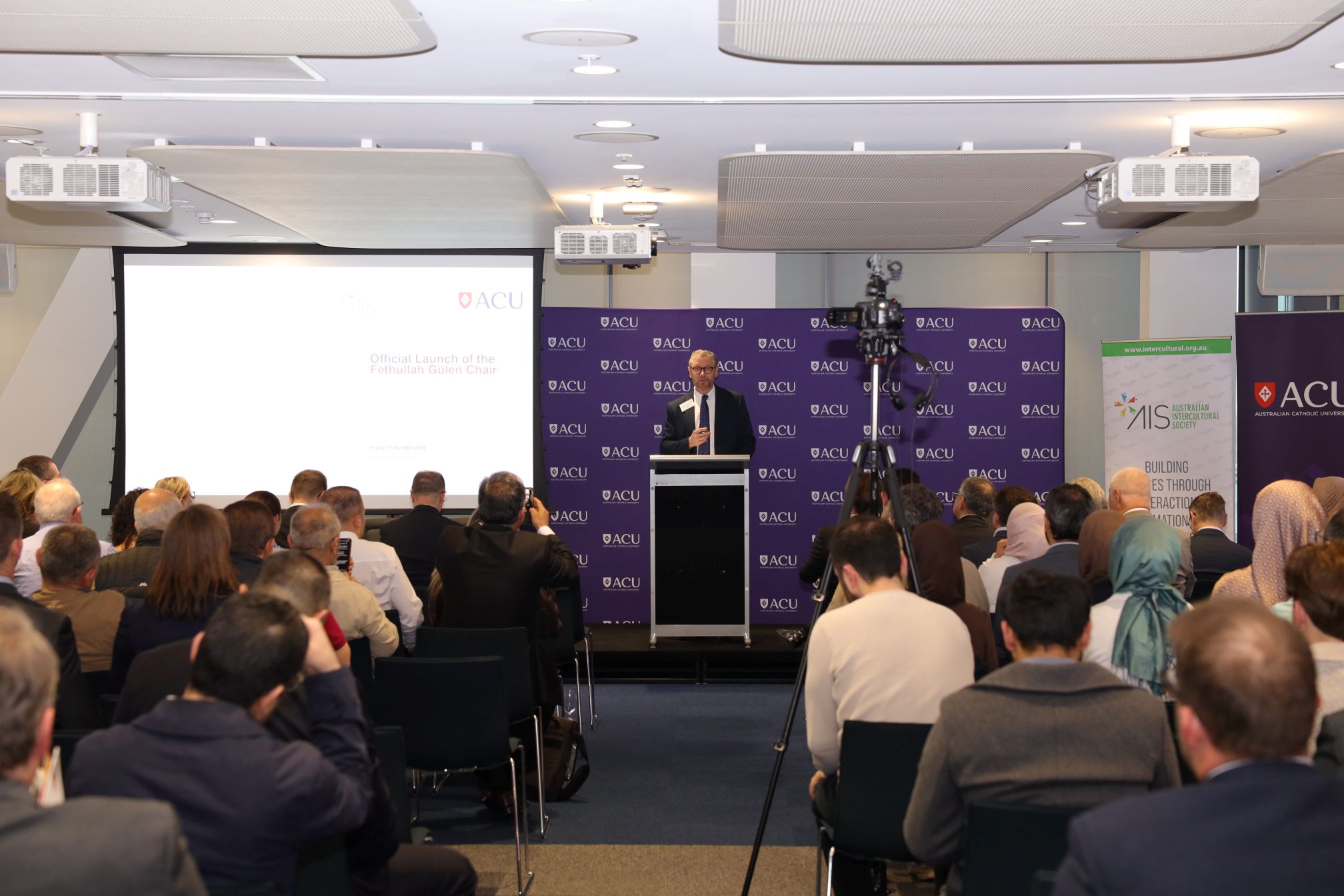
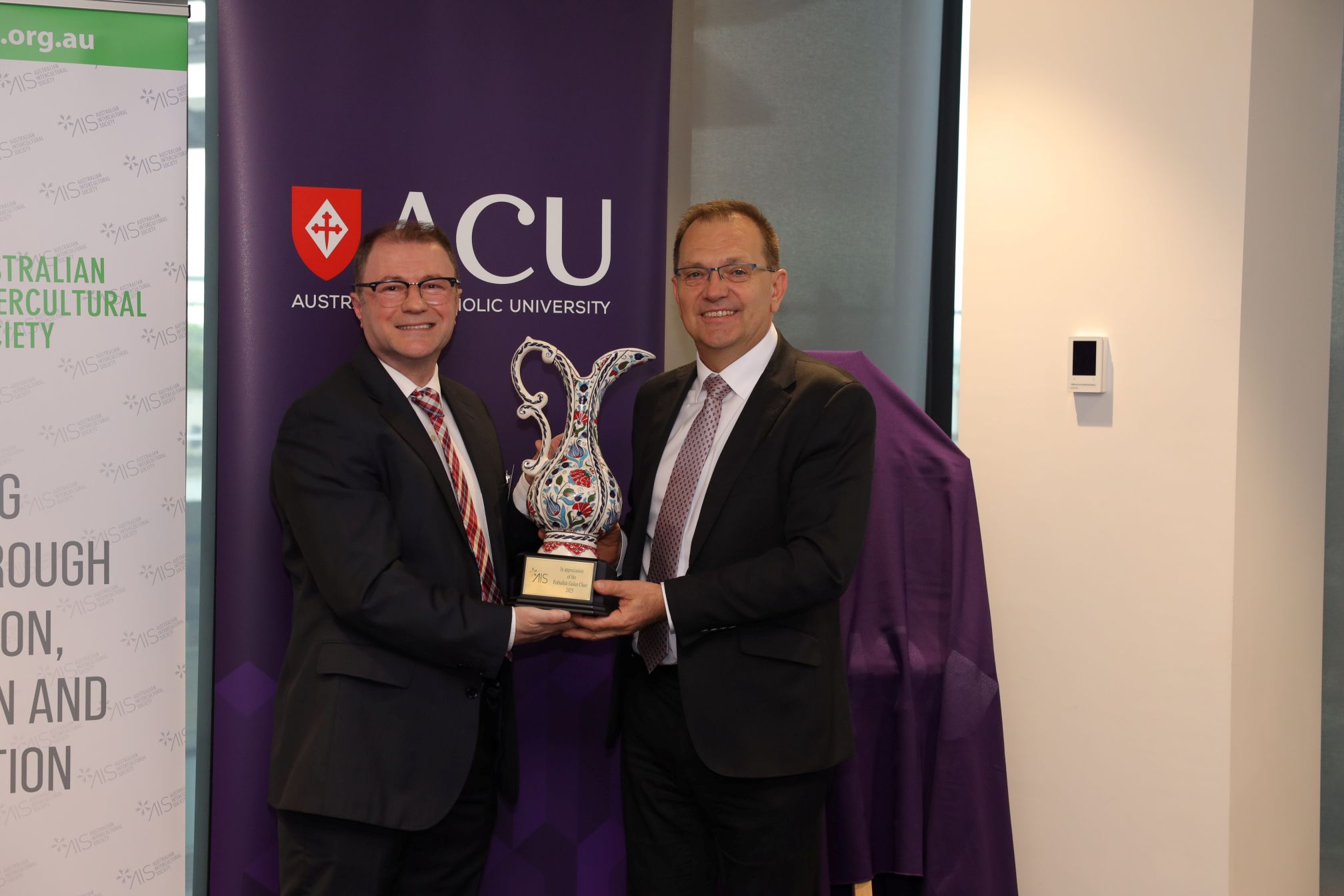
The Australian Intercultural Society and the Australian Catholic University (ACU) hosted a significant event on Friday, 17 October 2025, with the official relaunch of the Fethullah Gülen Chair in the Study of Islam and Muslim–Catholic Relations at the Greg Craven Centre, Melbourne Campus. The chair was launched and established in 2008. The event marks a significant milestone in interfaith collaboration pointing to a serious commitment to scholarship and dialogue output, which renewed the commitment to fostering understanding, respect and cooperation between the Muslim and Catholic communities.
The evening opened with a warm welcome and Acknowledgement of Country by Associate Professor Krista Maglen, Campus Dean of ACU Melbourne. She set the tone for the evening by grounding the gathering in respect for Australia’s First Peoples and their enduring spiritual connections to land and community—values that echoed the evening’s themes of reconciliation and shared humanity. The formal proceedings were guided by Professor Richard Colledge, Executive Dean of the Faculty of Theology and Philosophy at ACU, who served as Master of Ceremonies and led the event with grace and insight.
Professor Zlatko Skrbis, Vice-Chancellor and President of ACU, delivered the official opening remarks, offering reflections on the significance of the Chair’s re-establishment. In his address, Professor Skrbis described the launch as both “a restoration and a renewal of purpose at a pivotal moment.” He acknowledged the Australian Intercultural Society’s generous support and vision in re-establishing the Chair, noting that their shared dedication to intercultural understanding “stands as a beacon of hope in our community.” Tracing the history of the Chair, Professor Skrbis paid tribute to Professor Ismail Albayrak, who held the inaugural position when it was first established in 2008. “It is both fitting and moving that history has come full circle,” he said, welcoming Professor Albayrak back to ACU to preside over this next chapter. He also highlighted that the re-launch coincides with the 60th anniversary of Nostra Aetate—the Second Vatican Council’s landmark declaration on the Church’s relationship with non-Christian religions. This convergence, he reflected, serves as a timely reminder that “dialogue is not incidental to our faith traditions, but central to them.”“The Fethullah Gülen Chair,” he continued, “will be more than an academic appointment; it is an expression of faith in the power of dialogue itself.” He emphasised the Chair’s role in shaping a new generation of scholars, fostering rigorous research, and engaging the wider community in conversations that build trust and mutual understanding. Professor Skrbis concluded by affirming ACU’s enduring commitment to interfaith engagement, describing it as “a whole-of-society approach to healing communities, building trust, and supporting one another.”
Representing the Australian Intercultural Society, Executive Director Mr Ahmet Keskin spoke of the Chair as more than an academic initiative—it is “a statement about who we are as a society and the values we wish to nurture for generations to come.” He reflected on the enduring relevance of Fethullah Gülen’s philosophy, which situates morality and compassion at the centre of education and public life. He added “Education, when guided by compassion and enriched by wisdom, can becomes the most powerful force for good.”
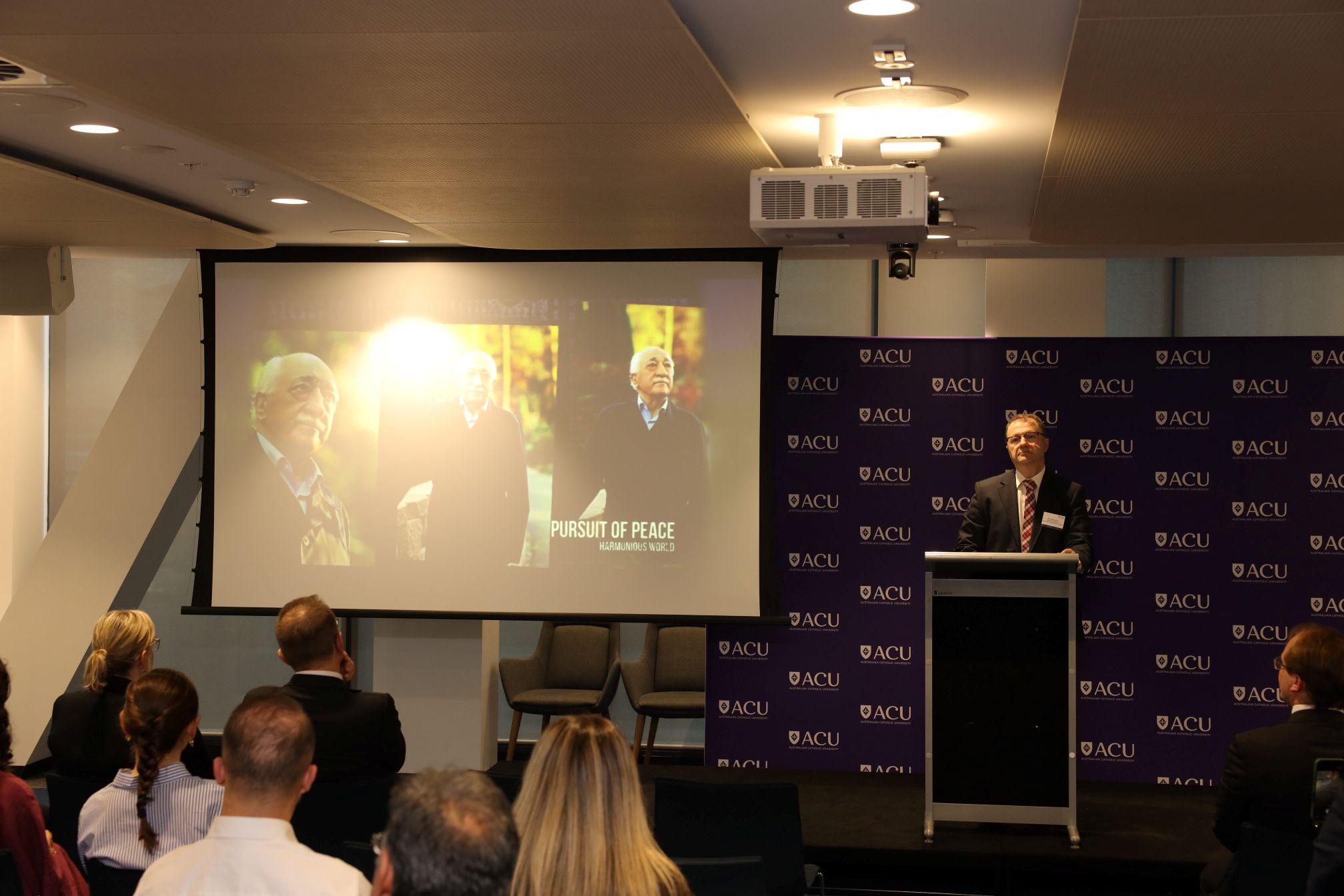
A short video presentation on the life of Fethullah Gülen followed, reminding guests of the late scholar’s profound contributions to education, philanthropy, and spiritual service. Gülen’s teachings on tolerance and dialogue were encapsulated in one of his most memorable quotes shared by Keskin: “Let us be so tolerant that the world will be wide enough for everyone. Let us open our hearts to humanity and be a home for all.” Keskin noted that the event was being held close to both the anniversary of Gülen’s passing on 20 October 2024 and the 60th anniversary of Nostra Aetate on 28 October 2025. He linked these two milestones as symbols of enduring hope and mutual respect. “We trust this Chair serves as a beacon,” he said, “a place where future generations can learn that faith and reason need not stand in opposition, that diversity is not a threat but a gift, and that true greatness lies not in power but in service to others.” He expressed gratitude to the Selimiye Foundation for its generous support and to all who continue to advance the values of dialogue, empathy, and education. His words highlighted the importance of collaboration between faith-based and academic institutions in nurturing a culture of peace and understanding.
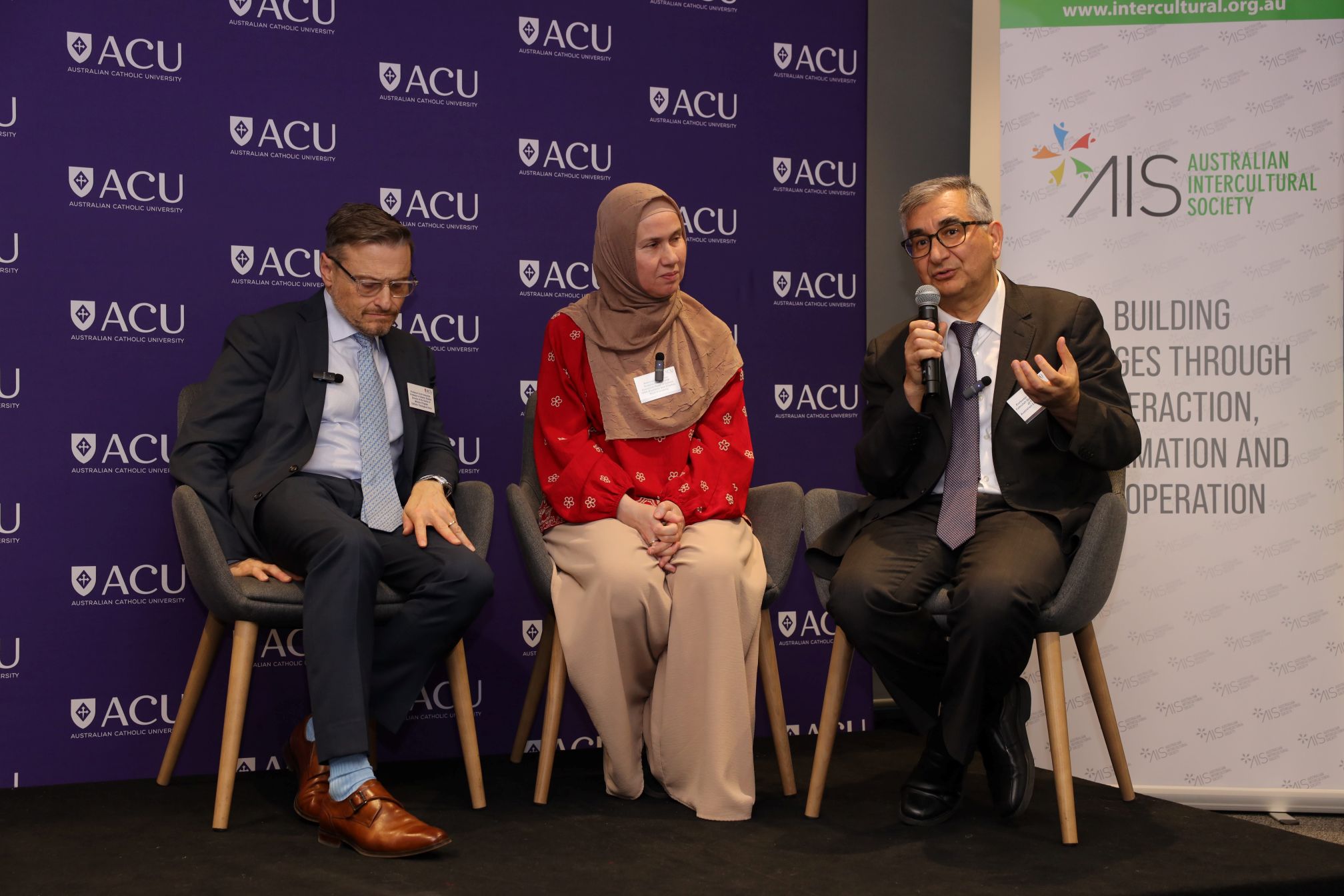
The evening’s scholarly highlight was a panel discussion on “The Legacy of Nostra Aetate,” facilitated by Emeritus Professor Gabrielle McMullen AM. The distinguished panel included Professor Ismail Albayrak from ACU, Professor Scott Alexander from the Catholic Theological Union in Chicago, and Associate Professor Zuleyha Keskin from Charles Sturt University. Each shared thoughtful reflections on how the 1965 document transformed interfaith relations and continues to guide faith communities in addressing contemporary global challenges.
In his keynote remarks, Professor Scott Alexander explored Nostra Aetate through the lens of practical theology, which he described as “rooted in the conviction that the lived experience of the human family is an indispensable source of knowing ourselves in relationship to God, one another, and creation.” He traced the document’s origins to the experiences of figures such as Pope John XXIII and the Jewish historian Jules Isaac, whose personal histories and courage after the Holocaust helped inspire the Church’s renewed vision for interreligious understanding. Professor Alexander reminded the audience that although Nostra Aetate was brief in length, its impact has been immense, urging believers “to forget the past and to work sincerely for mutual understanding and the promotion of social justice, moral welfare, peace, and freedom.”
He noted that the inauguration of the Fethullah Gülen Chair represents a robust and courageous response to Nostra Aetate’s call for dialogue. Yet he also emphasised that there remains much work to be done—particularly in recentering Indigenous religious traditions in interfaith dialogue and in forming interreligious coalitions to address issues such as climate justice and human dignity. “My fervent prayer,” he concluded, “is that the lived experience of dialogue at the heart of such initiatives will yield, God willing, new theologies and praxes of solidarity and hope in a world so desperately in need of both.”
The event concluded with a shared sense of purpose and optimism. Guests expressed a deep appreciation that the re-establishment of the Fethullah Gülen Chair represents not only an academic milestone but also a moral and spiritual one—a bridge between faiths, cultures, and generations. The evening embodied the spirit of collaboration and respect that lies at the heart of both the Australian Catholic University and the Australian Intercultural Society’s missions.
Click to read ACU Press Release